28 May 2026
Embedding Work Experience Earlier – Key Stage 3 Findings from the WEX Pilot
Why Start Work Experience in Key Stage 3?
The WEX pilot has demonstrated the value of introducing work experience earlier, particularly at Key Stage 3 (KS3), to ensure students experience the world of work before they are asked to choose their GCSE options in Year 9.
Traditionally, work experience has been concentrated in Key Stage 4, often through block placements in Year 10. While valuable, this model means many students are making important subject choices without a clear understanding of how learning connects to real workplaces or future pathways.
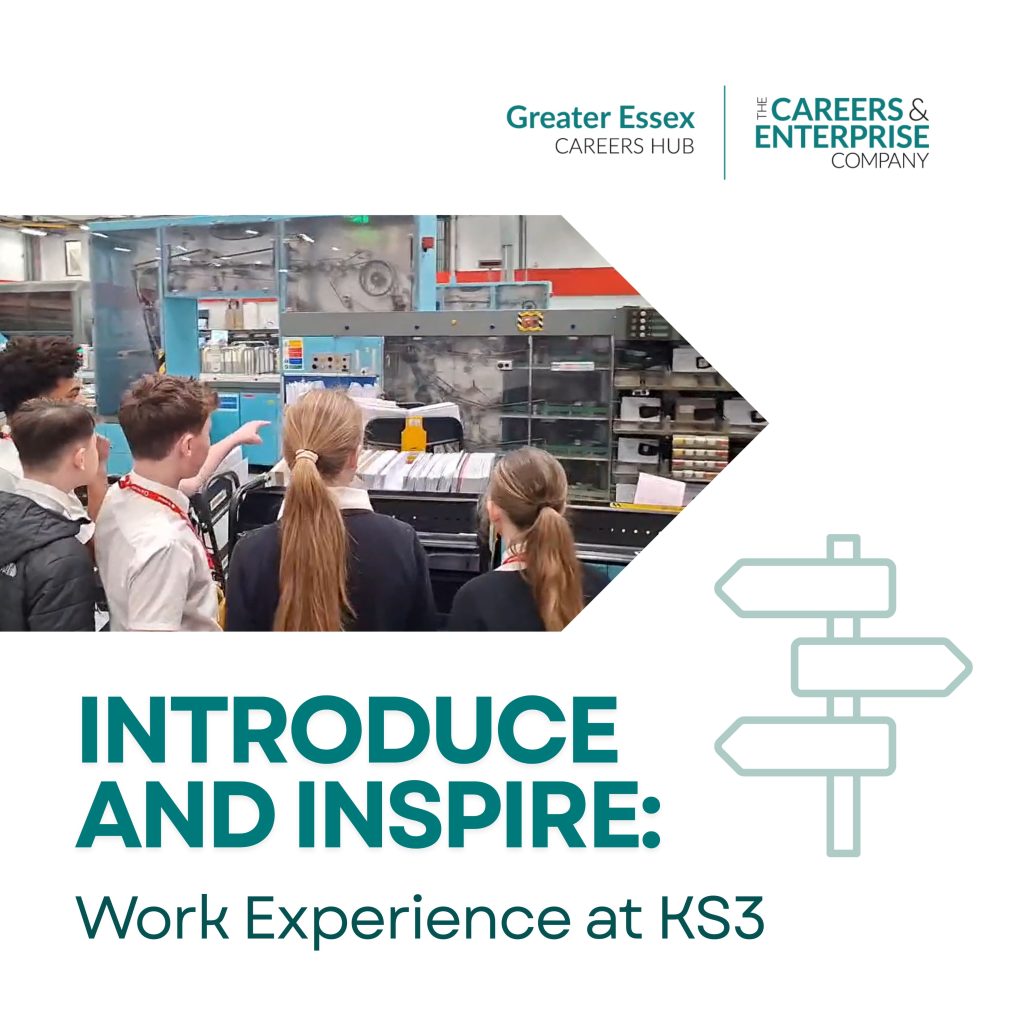
Through the pilot, schools instead focused on structured employer visits at KS3, designed to introduce students to a broad range of sectors and roles. These visits provided early exposure to different working environments, helped students see how classroom learning translates into practice, and demonstrated the subjects and skills required across different career routes. This ensured careers learning was not left too late, but embedded at the point where it could meaningfully inform decision‑making.
In no other area of the curriculum would students be removed from lessons for several days without clear learning objectives or intended outcomes, yet historically this has often been the case with work experience. The WEX pilot deliberately challenged this by treating work experience as a planned learning activity, with objectives and outcomes set from the Equalex framework. At KS3, experiences were anchored within the Introduce & Inspire phase, applying the same rigour to work experience that is expected elsewhere in teaching and learning.
Why Introduce & Inspire Matters Before GCSE Choices
Students are typically asked to choose their GCSE options in Year 9, often before they fully understand how subjects connect to jobs, which skills matter in different sectors, or what pathways are available to them. Positioning KS3 work experience within the Introduce & Inspire phase of Equalex helps address this, ensuring students get early, meaningful exposure at the right time. The focus is not on work readiness, but on building awareness, confidence and curiosity before key decisions are made.
This creates a more balanced, progressive approach across Key Stages, rather than placing too much pressure on KS4. By the time students move into a one‑week placement in Year 10, they are no longer going in blind. Having experienced a range of sectors through KS3 visits, they are better able to make an informed and genuine choice about where they want to go.
Importantly, this approach reduces reliance on personal networks or family connections, which can limit access for some students. Instead, schools can offer a broader range of opportunities and improve equity. Where planned carefully using local labour market information, these experiences can also highlight sectors with real opportunities – whether that’s skills shortages, ageing workforces, or growing pathways such as apprenticeships and T Levels. This helps ensure that KS3 work experience not only broadens horizons, but supports more realistic, relevant and informed decisions.
While approaches are still developing, this model is not limited to a single example. Case studies such as Royal Mail’s adapted outreach for mainstream and SEND schools, and the NHS Essex Health Care Academy’s co‑designed engagement model, show how employers are delivering flexible, meaningful experiences aligned to the Introduce & Inspire phase. Together, they reflect a growing range of sector‑based opportunities for KS3 learners and a more consistent approach emerging across Greater Essex.
From “Trips” to Purposeful Introduce & Inspire Work Experience
Several schools involved in the pilot already ran KS3 visits as part of their annual calendar. Through the WEX pilot, these were redesigned using an Introduce & Inspire lens, mapped explicitly against the 7 Meaningful Criteria, and embedded within curriculum planning rather than treated as enrichment activities. This included working directly with organisations such as Colchester Zoo to shape their education offer into a meaningful work experience opportunity. Building on this, schools developed the confidence and skills to engage employers independently, with some reaching out to Harry Potter World to co‑design similar experiences and adapt existing visits into purposeful work experience.
Early Identification and Reducing NEET Risk
As the WEX Pilot only began this academic year, it is too early to determine the direct impact of KS3 work experience on GCSE option choices or longer‑term destinations. However, one participating school has begun to analyse its historic work experience and destination data to better understand patterns linked to risk of becoming NEET. This initial analysis highlighted that students who were unable to secure a Year 10 work experience placement were more likely to reach the end of Year 11 without a confirmed post‑16 destination. While this represents early insight rather than conclusive evidence, it has prompted wider discussion about work experience as a potential early indicator of disengagement and vulnerability. In response, schools are increasingly viewing KS3 Introduce & Inspire experiences as an early identification and preventative measure, building confidence, awareness and aspiration before disengagement becomes embedded and before key transition points are reached.
Conclusion
The WEX pilot has shown that when work experience is introduced earlier, designed specifically for Key Stage 3, and underpinned by clear learning objectives and outcomes drawn from the Equalex framework, it becomes a powerful educational tool rather than a stand‑alone activity. Anchoring KS3 experiences within the Introduce & Inspire phase ensures work experience supports informed GCSE choices, improves engagement and equity, and lays strong foundations for progression, motivation and future pathways.
For schools considering how to begin, the starting point does not need to be complex. Many have begun by adapting existing visits into purposeful work experience, focusing on giving students exposure to a range of sectors rather than a single experience. Planning with local labour market information in mind can help ensure these encounters reflect real opportunities in the local area, while setting clear learning objectives from the outset improves quality and consistency. There is also increasing recognition that participation in work experience can act as an early indicator of engagement; targeting KS3 experiences more carefully can therefore support earlier identification of students who may be at risk of disengagement or future NEET outcomes.
Taken together, these approaches allow schools to move towards a more progressive and inclusive model, where work experience is embedded earlier, delivered more intentionally, and used not only to broaden horizons, but to support better decisions and stronger long‑term outcomes for all students.