10 November 2026
New national research highlights need for stronger employer connections, better technical pathway awareness and more meaningful work experience
The Careers and Enterprise Company have released their latest report on Learner Career Readiness. These national findings are based on the views of more than 527,000 young people across England. The report reinforces the importance of ensuring that every learner develops the knowledge, confidence and connections needed to make informed decisions about their future.
The research found that while career readiness improves as young people progress through education, many learners still lack awareness of local employers, have limited understanding of technical and vocational pathways and do not always report that work experience has influenced future plans.
For the Greater Essex Careers Hub the findings closely align with the priorities for this academic year, to help shape our work across Essex, Southend and Thurrock.
Turning learner voice into action
The report shows that while young people have aspirations, they still need more support to turn these aspirations into something tangible. Learner voice is critical in shaping careers programmes, keeping it relevant and inclusive.
This is exactly what our Youth Voice Driving System Change workstream aims to achieve, ensuring careers support is designed around the needs and experiences of young people.
Helping young people understand local opportunities
Only 55% of Year 7 learners said they were aware of local employers, highlighting the need to better connect young people with businesses on their doorstep.
Through our Employer Participation & Talent Pipelines workstream, we are working with schools/colleges and employers to ensure they are speaking the same language. Looking ahead at future growth sectors and emerging skills gaps, we can ensure that the careers education across Essex is aligned with the growth of our economy to provide businesses with clear talent pipelines from their local area.
Improving awareness of technical and vocational pathways
The report found that understanding of technical pathways develops too late, with only 20% of Year 9 learners understanding T Levels compared to 62% understanding apprenticeships.
Through our Technical, Vocational & Future Skills Pathways workstream, we are helping young people explore the full range of post-16 options and connect these pathways to local labour market opportunities.
Focusing on quality, not quantity, in work experience
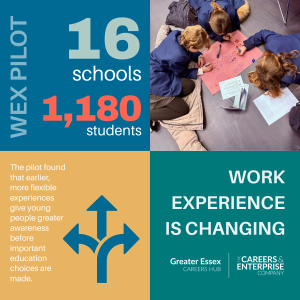
While 84% of Year 11 learners reported having workplace experience, only 65% said it helped shape their next steps.
This reinforces the importance of our Work Experience Reform workstream, which focuses on how we scale-up meaningful and relevant experiences that build confidence, skills and career understanding. Focussing on outcomes and impact rather than simply counting placements. It also supports our Essential Skills & Employability workstream, helping young people develop the skills employers value most.
Supporting every young person to succeed
The report highlights that some learner groups experience additional barriers to career readiness.
Through Aspiring Pathways and Inclusion and our focus on SLT Engagement and Careers as a Driver of Educational Outcomes, we are supporting schools to ensure careers education is inclusive, targeted and embedded across the whole-school approach.
Working together to create a future-ready workforce
The findings from this year’s report provide a timely reminder that careers education is about far more than helping young people choose their next step.
It is about ensuring every young person understands the opportunities around them, develops the skills employers need, gains meaningful experiences of work and has access to the networks and information required to make confident and informed choices.